
「旅に病んで夢は枯野をかけめぐる」
> “Fallen ill on the journey;
> In dreams I run wildly
> Over the withered field”
>This is a Ku by Basho. After he wrote this Ku, he died.
>
>This morning we heard the sad news that one of our HIEM member has passed away. He was not yet 70 years of old.. He was a medical scientist. He started Haiku with us in January of 2015 and left behind many touching Ku.
>
>“I wake into dreams
> Dissolving reality
> In nature’s beauty” … was his last Ku.
>
>Early this year, he was already complaining that he was not feeling well for some reason but he made a Ku:
>
>“flowers blossoming
>New life from a tiny seed
>New hopes too are born”
>
>His name was Alan Takeda and we are still in search of his kin as no one knows who or where they are. Haiku and little animals were his friends. We will sincerely miss him.>Here’s another Ku from Alan:
>
>“cool early evening
> A furry friend and blanket
> Warming heart and soul”
ODISSI DANCE

Last Saturday afternoon I went to enjoy Dance Festival in Maui’s Amphitheater. The theater is set in the “Keopuolani” Park. Where it used to be a zoo and botanical garden. The stage was set at the bottom center of an all grass covered horse-shoe shape slope. Audience will have to bring their own beach chairs or mats to sit on. The whole area is surrounded by thick tropical trees like bread-fruits trees and candle-nuts trees.
The show had full range of dance forms and schools, classic ballet to modern ballet, neo modern dance, Circ de Soleil type of Air dance, Hawaiian “Ulalena” troupes and more. My main purpose to attend this event was to watch Ms. Akari Ueoka and her members’ Oddisi dance performance. Akari is a certified teacher of this purely classical dance called Odissi from India, I have deep respect to Indian culture but rarely had an opportunity to appreciate this ancient and historical dance. She did not disappoint me. It was a wonderful performance and I was so much uplifted spiritually by watching her dance.
Akari is my fellow Haiku person at our Maui Hototogisu Haiku (Japanese) group.
She is not only excelled in her dancing but also a wonderful author of Haiku. In our October Kukai she contributed uplifting Ku to us among others. Let us share her Ku from our October Kukai:
木洩れ日のスポットライトきのこたち Komore-bi no spot light kinoko-tachi (by Akari)
(translation)
Through the tree canopy Flood lights of sun beam feature Little mushrooms
WINE, BEER, SAKE…
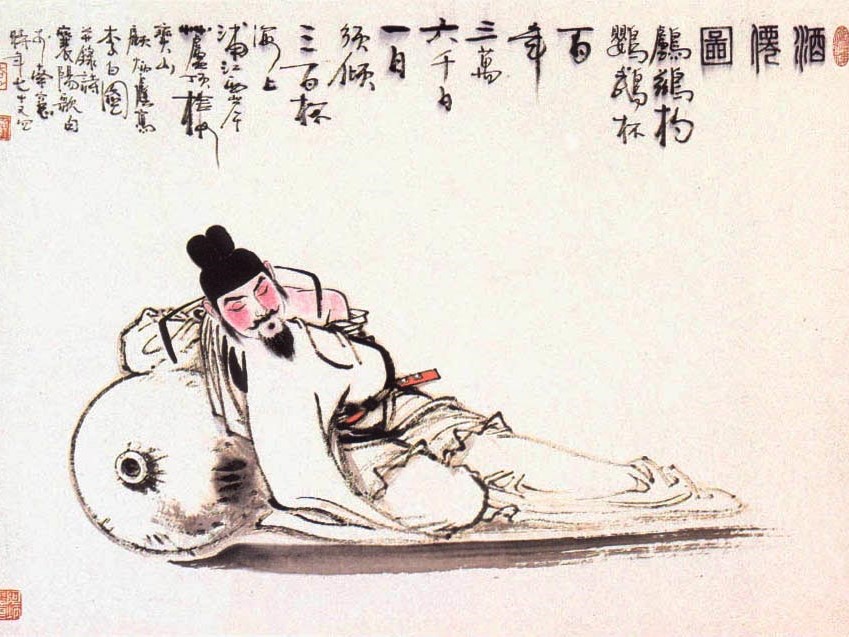 There are world famous poets who loved wine, or Beer, or Sake.
Li Po (701-762) of China from Tang Dynasty was one of them, as well as DuFu (712-770) who was regarded as the Shakespeare of China and made many historical story-telling poems. Yet he loved wine so much that he left behind many drunken episodes: one of them was that one beautiful full moon night he was on a boat and he tried to grab the Moon but fell into the river.
Persian Poet Rumi’s poems were full of love and spiritual intoxication.
So were Omar Khayyam‘s. His Quatrain XII is familiar to us all.:
A Book of Verses beneath the Bough, A Jug of Wine, a Loaf of Bread, and Thou Beside me singing in the Wilderness— Oh, Wilderness were Paradise enow!
Every year in this harvest season, wine connoisseurs talk about the year’s Beaujolais. In Japan, the year’s first produce of Sake is called Arabashiri (New runners) and that word is considered a Kidai. … and there is the Oktoberfest in Munich, Germany for Beer…
The season gives plenty of reasons to make Haiku.
Bokusui Wakayama (1885-1928) was a famous poet in Japan. He was also known for his love of Sake. One of his Waka reads (excerpt):
Aki no yo-no Sake-ha shizukani nomu bekari keri. 秋の夜の酒は静かに呑むべかりけり
Deep in the autumn, Sake should be appreciated In the quiet of the soul
News as inspiration and future Kidai

It’s already November! Remind me of Basho’s monologue “the passing days and months are eternal travelers in time”
The announcement of Crown Prince’s only daughter ’s engagement in last May was a happy news for Japanese people, although by her engagement to be married to a commoner makes her giving up her title, Princess, by the current law of Japan. Ms. Itsuki Natsui, a popular Haiku personality in Japan, made a Ku for the occasion.
“Go-Seikon News Katsuo-wa atsuku Kire”
(News of Royal engagement slice Bonito fish for ‘sashimi’ extra thick!)
Bonito is one of the celebrated fish in Japan and also a Kidai for summer.
Where as in the US, our HIEM member, Bryan, made a Ku in the memories of Princess Di’s passing and the terrorists attack to the NY Twin towers – the both of the tragedies occurred in September.
Must we celebrate The Princess and the Towers Unsteady my heart
Just a few example of Ku that a News can be the inspiration for Ku.
“Issa Day” (November 19th)

Issa Kobayashi (1763-1828) was one of Japan’s great masters of Haiku. Issa’s Ku are known for his humanity and love of weaker living things. His Ku expressed frank emotions around his daily life, even though his life was a perpetual struggle, of his yarning for love, status and financial stability and the acceptance of society. He was a prolific author of Ku, said to have written over 20,000 in his lifetime.
Some of Ku by Issa (一茶の句)
やせ蛙負けるな一茶ここにあり
Skinny lil’ frog
Don’t be discouraged
Here I am to support you
雀の子そこどけそこどけお馬が通る
Hey Sparrow chicks
Move over, out of the way
Big horse is coming
(When he lost his only child)
露の世と知りながらさりながら
This dewdrop of the world
Is a dewdrop world, that I know
…and yet…. Yet….
Contribution Ku for Issa-Day from “House of Issa Haiku Contest”
一茶忌にみなきて鳴けよ夕蛙
Issa-ki ni mina kite nake-yo yu-kaeru
It’s the Issa-Day
you should gather and cry
all the frogs At dusk
句になればゴキブリも好き蠅も好き
Ku ni nareba gokiburi-mo suki Hae-mo suki
Should it be a Ku
Love the cockroaches
Even the flies
HIEM October 2017 Kukai:
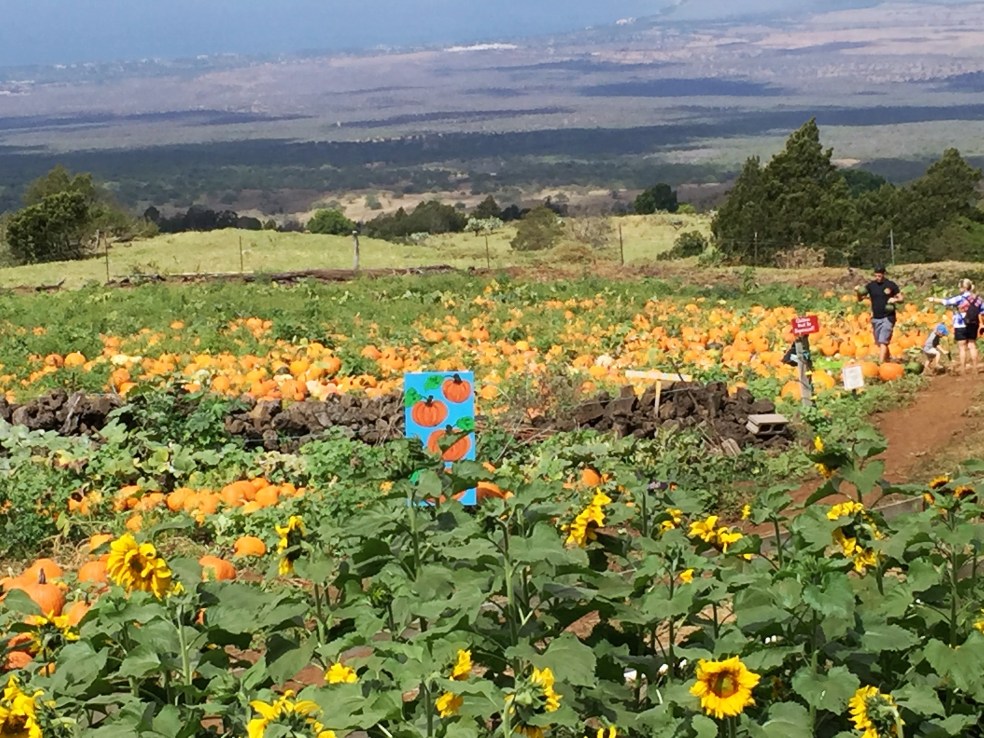
We celebrated our pre-Halloween Kukai, with a “Pumpkin-<Pie/cupcake” with whipped cream on top that Curt had baked especially for each of us.
Good news is that two new friends submitted their Ku for this month.
Eva Kurkova from Prague, Czech Republic — and her ku was voted as ‘favorite’ by all of the attending members, plus one from an absentee voter. Congratulations to your success for your first submission of Ku to us.
Another brand new friend of Haiku in English, Maui, is a lady from Maui, Susan Lussier.
KU OF THE MONTH(OCTOBER, 2017)
by Lois Janis (HIEM)
Dashing dragonflies
Creatures from another time
Searching for warmholes?
SPECIAL RECOGNITION
Eva Kurcova
The autumn fog near
Mushroom’s hats everywhere
Forest cool and clear
150 years since first Japanese immigrants came to Hawaii

2018 will be the 150th year since the first group of Japanese Sugarcane field workers officially immigrated to the island of Maui. At that time Hawaii was a sovereign nation. But Hawaiian monarchy was overthrown in 1893 and in 1959 Hawaii became the 50th State of America. Then again, by the end of 2016 the entire sugarcane production was terminated in Hawaii.
There are many commemorative events for the history of the relationships between Japan and America for next year. As one of the events, documentary films in relation to the Pearl Harbor Attack are to be shown at a museum on Maui. I was asked to translate the films into English and that took my time away from writing this blog.
Now the requested work is almost done and we can resume our Haiku-Mondo again.
Maui Hototogisu-Kai (MHK) October Meeting

Our MHK (Japanese language only) meeting was held on the 14th October. As the most of members were visiting Japan at this time, there were only 3 of us attended the Kukai. The smaller the group, the more intimate atmosphere — we enjoyed its coziness. The Maui Ho. Kai (MHK)” is regularly meeting at least once a month at the Kahili Golf Course’s Club House restaurant — overlooking the course, the sea and the mountains.
We have early lunch there and then the meetings are held over drinks (non alcoholic) and some ‘munchies’ that some of the members brought back from their recent trips.
October is the last Haiku-month of ‘Autumn’. The Kendai (pre-proposed Kidai) were: “little (migrant) birds (小鳥)”, and “mushrooms(きのこ)”
Here are the Ku voted as “favorites” (originals were in Japanese – translated by RJ)
木洩れ日のスポットライトきのこたち (komore-bi no Spotlight Kinoko tachi)
Through the tree canopies
A ray of light features
Little mushrooms ( Akari)
赤子泣きゆりかご覗く小鳥かな
An infant’s crying
in a rocking cradle
Concerned bird peeks in ( Akari)
This blog is a Forum for Haiku Lovers
Dear Friends of Haiku Lovers,
As I mentioned at the beginning, the word ‘Mondo’ means “exchange of ideas’ in Japanese (and Zen) as well as ‘World’ in Spanish or Italian.
The idea of this blog page “Haiku-Mondo” is not for my personal scribbling but for all of us Haiku Lovers of the world to exchange ideas about Haiku.
Please send in your thoughts and Ku to this Salon-page. However, please bear with me while this new born “Haiku-Mondo” page is in its “teething” stages and there’re so much more to learn and polish the format.
Meanwhile, until the page’s format is better settled, please send your comments, essays and Ku (perhaps with some photo?) to this address:
Because of a limited blog page space, please limit your comments or pieces to within (1000) words. Thank you.
Festival of the Bull

The annual Running Bull Festival in Pamplona, Spain (in June) is a world famous festival. But in Japan, in Kyoto, there is another unique Festival of the Bull which is held every year on the 10th of October. It is a historical event that originated in 1012. On this date a masked young man rides on a bull, attended by four colorfully masked demons and a band of musicians. The procession goes three times around the Koryu Temple ground, then stops to recite a strange prayer that no one understands. Hence, the ‘Bull Festival’ became one of the October Kidai to this day.
The celebration of harvest and many types of agricultural shows are held all over the world. Hawaii’s cowboys are called ‘Paniolos’ and their rodeos are known for its high quality. The annual ‘Maui County Fair’ is held at this time also. So I visited the fair last weekend. In a special arena, I admired some prize-winning cows and bulls — besides them there were roosters, pigeons and rabbits. On the island, the fair’s biggest attraction is always the amazing variety of Orchid (which is a Kidai for September).
Six cows are grazing the seventh stands near a fence staring into space Richard Wright (1904-1960)
 haiku-mondo.com